


Creating a cosy garden seating area transforms an outdoor space into a retreat for relaxation and enjoyment. To achieve this, one can incorporate comfortable seating, ambient lighting, and natural elements that blend harmoniously with the surroundings. These elements not only enhance the aesthetic appeal but also invite family and friends to gather and enjoy the tranquillity of the garden.
Incorporating cushions, throws, and other textiles further elevates comfort, making it an inviting space throughout the seasons. Plants and flowers can add colour and fragrance, which enrich the sensory experience of the outdoor setting. Thoughtful placement of furniture and the choice of materials can create a harmonious and functional area.
By focusing on comfort and style, anyone can turn a simple garden into a cosy haven. This approach helps maximise the use of outdoor space, allowing for entertaining, reading, or simply unwinding in nature.
Planning Your Cosy Garden Seating Area
Creating a cosy garden seating area begins with thoughtful planning. Assessing the outdoor space, selecting the right location, and gathering inspiring ideas are vital steps. Each element contributes to a comfortable and inviting garden setting.
Assessing Your Outdoor Space
To start, evaluate the size and shape of the garden. He or she should take note of the existing landscape features, such as trees, shrubs, and pathways. This understanding helps determine where seating will fit naturally. For homeowners looking to pair their outdoor furniture with healthy turf, services such as affordable sod delivery near Clearwater (or elsewhere) can supply premium, locally grown rolls that establish a lush lawn setting for garden seating areas.
Next, consider the sunlight and shade patterns throughout the day. Identifying areas that offer shelter or warmth can greatly influence the comfort level of the seating area. If the space is limited, explore options for vertical gardens or compact furniture to maximise comfort without overcrowding.
Selecting the Perfect Location
Choosing the best spot for the seating area is crucial. It should be easily accessible and ideally placed for views of the surrounding garden. An inviting corner or a spot near a flower bed can provide a serene atmosphere.
Proximity to amenities like a barbecue or a water feature can enhance the experience. Residents should also evaluate wind exposure and opt for locations that offer protection from strong breezes while still allowing for the enjoyment of fresh air.
Inspiring Garden Ideas for Comfort
Incorporating comfort elements is key to a cosy garden area. Using soft furnishings like cushions, throws, and blankets can provide warmth and style. Opt for weather-resistant materials to ensure durability.
Consider adding elements such as lanterns or fairy lights for ambience during the evening. A small table can be useful for drinks or snacks, making the area more functional.
Plants play an essential role; fragrant flowers or climbing vines can create a soothing environment. For a small garden area, utilising planters or hanging baskets optimises vertical space while adding beauty.
Choosing Comfortable and Practical Garden Furniture
Selecting the right furniture is crucial for creating a comfortable garden seating area. This involves understanding the types of garden furniture available, enhancing comfort with cushions and blankets, and adding outdoor rugs to create warmth and cohesion.
Types of Garden Furniture
When choosing garden furniture, various types are available to suit different needs. Wooden furniture offers a classic look and durability, but should be treated for weather resistance. Metal furniture, such as aluminium or wrought iron, provides a modern touch and is typically low maintenance. Plastic options are lightweight, affordable, and often come in various colours.
Consider functionality: reclining chairs, dining sets, and benches serve different purposes. To maximise space, foldable or stackable furniture can be beneficial. Additionally, accessories from companies like Just Parasols can also be considered, as they provide shaded areas that can make garden seating more comfortable and protect outdoor furniture from prolonged sun exposure. Comfort is key; choose ergonomic designs that invite relaxation, ensuring the seating arrangements are suitable for extended use.
Incorporating Cushions and Blankets
Cushions and blankets add layers of comfort and style to garden furniture. Outdoor cushions should be weather-resistant and made from sturdy fabrics to withstand moisture and fading. Look for options with removable covers for easy cleaning.
Selecting a variety of colours and patterns can enhance the aesthetic appeal of the seating area. Throw blankets not only provide warmth during cooler evenings but also introduce texture. Opt for materials like acrylic or polyester, which are both durable and easy to care for.
Strategically placing cushions on seating can promote a welcoming atmosphere. It is advisable to keep a few blankets handy for chilly nights, making the space inviting at all times.
Adding Outdoor Rugs for Warmth
Outdoor rugs contribute significantly to the overall comfort of a garden seating area. They help define spaces, creating an inviting atmosphere. Choose rugs specifically designed for outdoor use, made from materials like polypropylene or natural fibres that can withstand the elements.
Consider the size of the rug in relation to the seating arrangement; it should encompass all furniture pieces for a cohesive look. Patterns and colours can enhance the garden’s aesthetic, complementing other decorative elements.
Rugs also add warmth underfoot, making the seating area feel cosier. Regular cleaning and maintenance will prolong the life of the rug and keep it looking fresh throughout the seasons.
Enhancing Ambience and Warmth
Creating a cosy garden seating area involves carefully selecting elements that contribute to a warm and inviting atmosphere. Key factors include various forms of outdoor lighting, heat sources, and decorative accessories that enhance the experience.
Outdoor Lighting and Garden Lighting Ideas
Effective garden lighting transforms outdoor spaces after sunset. Combining multiple sources can create layered illumination.
Consider using subtle pathway lights to guide guests, ensuring safety and enhancing visual interest. Spotlights can highlight specific plants or decorative features. To achieve versatility, employ dimmable options that allow for adjustments based on the occasion.
Using solar-powered lights is an eco-friendly choice. They charge during the day and illuminate at night without additional electricity usage. Incorporating warm white LEDs fosters a soft glow, perfect for intimate gatherings.
Fire Pits and Other Heat Sources
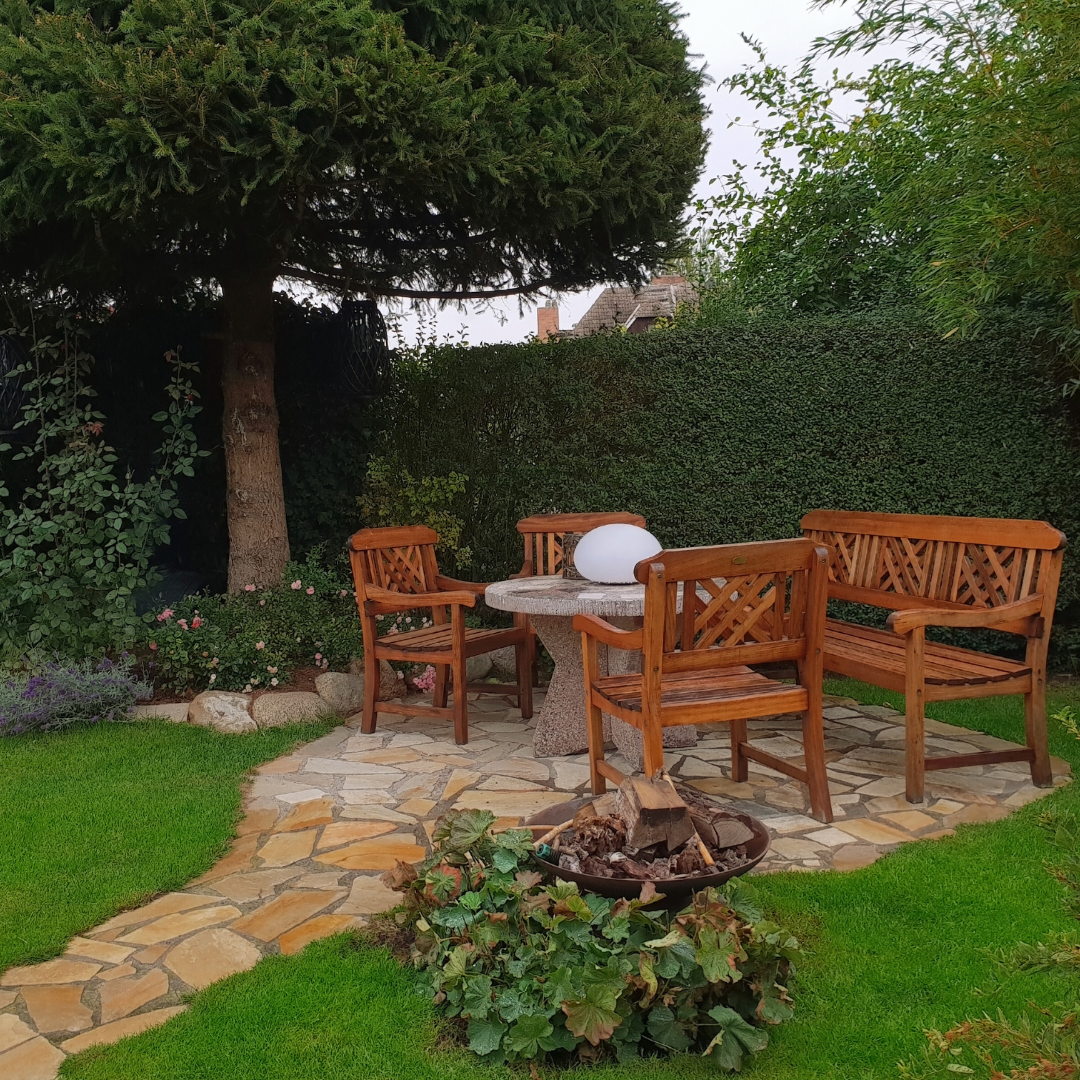
A fire pit can serve as both a heat source and a focal point in the garden. Available in various styles, they can fit aesthetic preferences from modern to rustic.
Whether opting for a built-in or portable fire pit, safety should be a priority. Surrounding seating with non-flammable decor and ensuring suitable spacing is essential. They provide warmth for cooler evenings while encouraging social interaction.
Alternative heat sources include patio heaters and outdoor fireplaces. These options can extend outdoor enjoyment through colder weather, ensuring a comfortable atmosphere year-round.
Candles and Lanterns for Atmospheric Touches
Candles and lanterns introduce a charming, atmospheric layer to any garden seating area. They are versatile and can be used freely or in strategic arrangements.
Pillar candles on tables or hanging lanterns in trees create a magical effect. Battery-operated candles offer convenience without the worry of open flames.
Opt for hurricane lamps to protect the flames from wind and provide ambient light. Using scented candles can also enrich the sensory experience, adding fragrance to the outdoor space.
String Lights and Spotlights
String lights are a popular choice for adding warmth and festivity. They are easy to hang and can transform garden features into captivating areas.
Looking for versatile arrangements, installing them along fences, in trees, or overhead can create a whimsical canopy. For garden pathways, use spotlights to accentuate significant elements and extend usable space.
Combining string lighting with adjustable spotlights allows for customisable brightness, catering for casual evenings or more significant celebrations. When done effectively, this combination enhances the tranquillity and comfort of the garden setting.
Structuring and Defining Your Seating Area
Creating a distinct area for seating in a garden enhances its functionality and aesthetic appeal. Key elements like pergolas, natural boundaries, and suitable paving materials effectively define the space while providing comfort and style.
Using Pergolas and Trellis
Pergolas are a popular choice for creating structure in garden seating areas. They provide a framework that can be adorned with climbing plants, offering both shade and visual interest. A well-placed pergola can create a focal point, drawing the eye while separating the seating area from other parts of the garden.
Trellises can complement pergolas by adding vertical elements that further define spaces. They can support flowering vines, enhancing privacy while offering a lush, green backdrop. Choosing materials for pergolas and trellis, such as wood or metal, should align with the garden’s overall style for cohesive aesthetics.
Complementing a pergola with well-designed decking or a sturdy platform not only defines the seating area but also addresses drainage and level changes. Working with experienced professionals ensures joints, fixings, and timber treatments suit local conditions and prolong the structure’s life.
Local specialists familiar with coastal climates can recommend materials and finishes that withstand wind and salt spray while matching the garden’s aesthetic. For homeowners in Auckland, engaging trusted contractors such as Deck Builders Auckland can simplify integrating pergolas, decking and adjacent hardscapes into a cohesive outdoor room.
Incorporating Hedges and Natural Boundaries
Hedges serve as effective natural boundaries and can delineate the seating area while adding greenery. Choosing low-maintenance varieties ensures that the space remains inviting without excessive upkeep. Plants like boxwoods or lavender offer structure and can be shaped easily, providing both form and fragrance.
Additionally, incorporating other natural features, such as stone walls or bamboo screens, can enhance privacy and shelter. These boundaries not only contain the seating area but also create a tranquil atmosphere, ideal for relaxation or social gatherings.
Paving and Flooring Solutions
The choice of paving enhances the functionality of the seating area. Materials like flagstone, gravel, or outdoor tiles offer various textures and aesthetics. For a natural look, flagstones can be laid in irregular patterns, blending seamlessly with the surrounding garden.
Gravel is another excellent choice, providing drainage while allowing for easy installation. It is important to ensure that the surface is level and stable for comfort. Using outdoor rugs can also add warmth and define the seating area visually, complementing the paving material.
Creating a Functional Outdoor Room
Designing a seating area as an outdoor room involves careful planning of layout and furnishings. Comfortable seating, such as weather-resistant chairs or a stylish bench, should be arranged to encourage conversation. Adding a coffee table can create a focal point, inviting people to gather.
Beyond just seating, the overall functionality of an outdoor room can be greatly enhanced by dedicated structures. For instance, having a well-placed shed can provide essential storage for gardening tools, outdoor cushions, or even serve as a small workshop, keeping the main seating area clutter-free.
When considering these additions, exploring options for storage sheds for sale allows homeowners to find durable and aesthetically pleasing solutions that complement their garden design. These structures not only offer practical benefits but also contribute to the overall organized and inviting feel of the outdoor space, making it truly an extension of the home.
Incorporating lighting options like fairy lights or lanterns enhances usability in the evenings. To maintain comfort, consider adding cushions and throws that can endure outdoor elements. Accessories such as planters or decorative screens can also enrich the character of the space, making it a true extension of the home.